

- 4 mins
Long before its mountains and glaciers shaped the landscape we know today, Torres del Paine was part of an ancient marine world. Near Tyndall Glacier, dozens of ichthyosaur fossils are helping scientists piece together that distant past, including Fiona, an extraordinary pregnant female that lived 131 million years ago.
Torres del Paine is known for its mountains, glaciers and dramatic landscapes, but the rocks beneath them preserve a story that began much earlier. During the Cretaceous Period, part of this region of Patagonia lay beneath the sea and was home to wildlife very different from anything found here today.
Some of the clearest evidence of this ancient world has been discovered near Tyndall Glacier, in Torres del Paine National Park, where scientists have identified an exceptional concentration of ichthyosaur fossils.
What Is an Ichthyosaur?
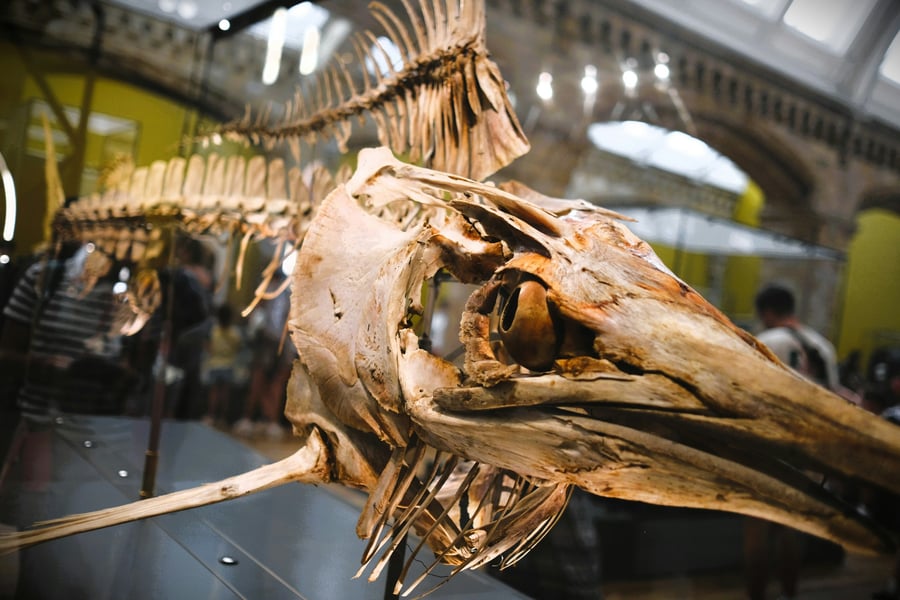
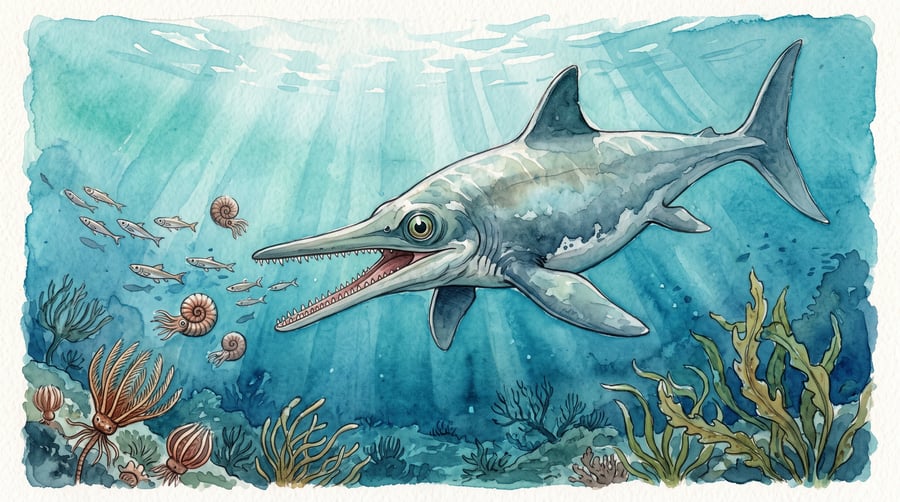
Ichthyosaurs were marine reptiles that lived throughout much of the Mesozoic Era, from around 250 to 90 million years ago. Although they lived at the same time as dinosaurs, they belonged to a different group and were highly adapted to life in the ocean.
Their streamlined bodies resembled those of modern dolphins, with flippers and tails built for efficient swimming. They breathed air through lungs and therefore had to surface regularly, while females gave birth to live young in the water.
The name ichthyosaur means “fish lizard”, although they were neither fish nor dinosaurs. They ranged widely in size and inhabited marine environments across the world for millions of years.
An Extraordinary Fossil Site Near Tyndall Glacier
Conditions on the ancient seafloor helped preserve many of the ichthyosaurs found in this part of Patagonia. Scientists believe some individuals were rapidly buried by underwater flows of mud and sediment, protecting their remains and allowing them to fossilise.
Many of these fossils have come to light as Tyndall Glacier has retreated, exposing rock surfaces that were previously covered by ice. As new areas emerge, geological layers containing remains millions of years old can also become visible.
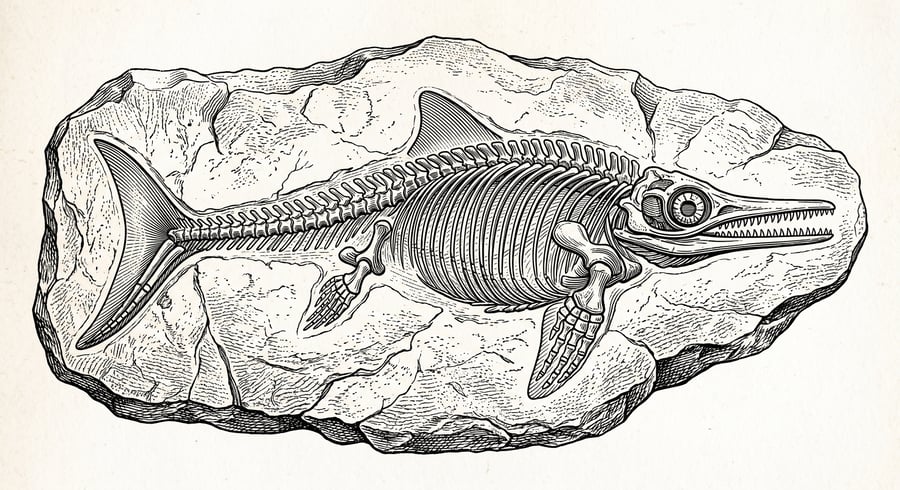
To date, around 87 ichthyosaur specimens have been identified in the Tyndall area, several of them remarkably complete and still preserving articulated skeletons.
The fossils include adults, juveniles, newborns and pregnant females. This diversity suggests the area may have played an important role in the reproduction and early life of these marine reptiles.
Among all of these specimens, one has become particularly significant.

Fiona: An Exceptional Discovery
In 2009, Chilean palaeontologist Judith Pardo-Pérez identified the fossil of an approximately four-metre-long ichthyosaur near Tyndall Glacier. The specimen would later become known as Fiona.
Because of the remoteness and difficult access to the site, the fossil remained in place for more than a decade. In 2022, a scientific team was finally able to excavate and remove the specimen intact for further study.
Research confirmed that Fiona belonged to the species Myobradypterygius hauthali and was a pregnant female. Inside her body, scientists found the skeleton of an embryo measuring around 50 centimetres, providing valuable evidence for the study of ichthyosaur reproduction.
The fossil also revealed clues about other aspects of her life. Researchers identified small fish vertebrae associated with her diet, as well as abnormalities in one of her front flippers that may have resulted from injury or disease.
A Fragile Record Emerging from the Ice
The same process that reveals new fossils also creates challenges for their conservation.
Once exposed, fossil-bearing rocks are subjected to wind, rain, temperature fluctuations and repeated cycles of freezing and thawing, all of which can gradually damage both the rock and the fossils it contains.
Scientific work in the area therefore goes beyond identifying new specimens. Researchers must also document discoveries, assess their condition and determine how best to protect fossils that remain in place.
The remote location of the site and the region’s demanding weather conditions add another layer of complexity, making each scientific expedition a significant logistical undertaking.
Why Are the Tyndall Fossils So Important?
The fossil record of Cretaceous ichthyosaurs in the Southern Hemisphere is far more limited than in many other parts of the world. The number and preservation of the specimens found near Tyndall Glacier therefore provide a rare opportunity to understand how these marine reptiles lived in this part of ancient Gondwana.
The fossils can reveal details about their diet, reproduction, growth and health. Specimens such as Fiona are particularly valuable because they preserve several types of biological evidence within a single individual.
Together, these discoveries have made the Tyndall Glacier area an important site for palaeontological research and have opened a window onto a chapter of Patagonia’s natural history that remained hidden for millions of years.
A Different Side of Torres del Paine
The Tyndall fossils are not part of the park’s visitor trails and are protected for scientific research and conservation. Some specimens have been removed for study, while many others remain embedded in the rocks of the area.
Their presence reveals a lesser-known side of Torres del Paine: a story that began long before its present-day mountains, glaciers and forests, when this part of Patagonia lay beneath the sea.

.jpg)