
- 12 mins
From one of the highest puma densities documented anywhere on Earth to the endangered huemul deer, this is the wildlife that defines Chile's most iconic national park.
Torres del Paine is home to one of the most diverse wildlife communities in Chilean Patagonia. Within the National Park, more than 25 mammal species and around 100 species of birds share the same dramatic landscape — including the second-largest cat in the Americas, one of South America's most threatened native deer, and the largest flying bird on Earth.
So, what wildlife can you actually see in Torres del Paine? This guide walks you through the park's most representative species: what makes each one remarkable, and where you're most likely to spot them.
Guanaco: The animal that holds the ecosystem together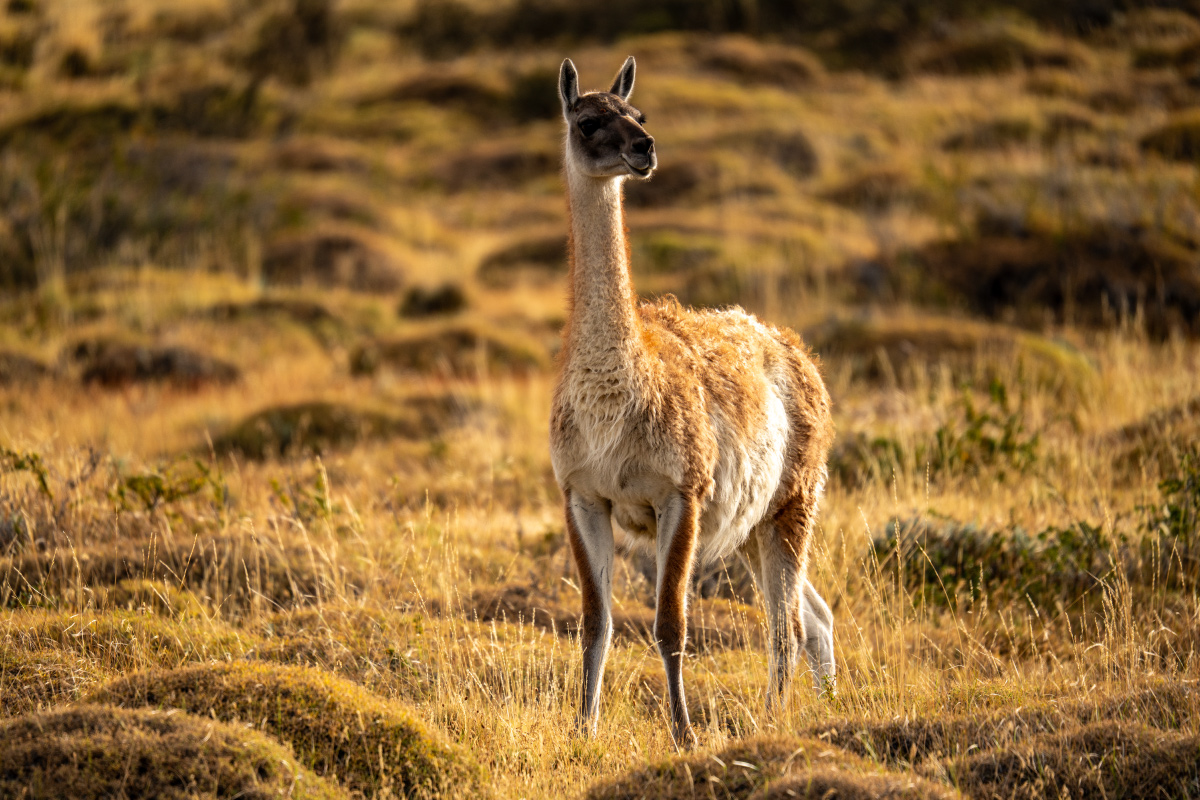
The guanaco (Lama guanicoe) is Patagonia's most common wild camelid and, without question, the most visible animal in Torres del Paine. A distant cousin of the camel, the species arrived in South America millions of years ago and has since adapted to elevations ranging from sea level to over 4,000 meters (13,000 ft). An adult guanaco can weigh up to 100 kilos (220 lbs), live more than 20 years, and run at speeds of 60 km/h (37 mph) across open terrain.
Their social structure is strictly hierarchical. Family groups consist of a dominant male, several females, and the year's offspring — known locally as chulengos — born between November and February and able to stand within minutes of birth. Young males without their own territory form bachelor herds that sometimes exceed 30 individuals. The guanaco's alarm call — a short, nasal whinny — is one of the most distinctive sounds of the Patagonian steppe, and often signals the presence of a puma kilometers away.
Its ecological role goes far beyond what's visible. The guanaco anchors the entire food chain of the park: it's the puma's primary prey, a key food source for the Andean condor, and a major influence on vegetation patterns through grazing. Without healthy guanaco populations, pumas cannot survive — and without pumas, herbivore numbers quickly overwhelm the ecosystem. The best places to observe guanacos are Laguna Amarga, Lago Sarmiento, and the trailhead of the Base Torres hike in the early morning hours.
Puma: the apex predator of Torres del Paine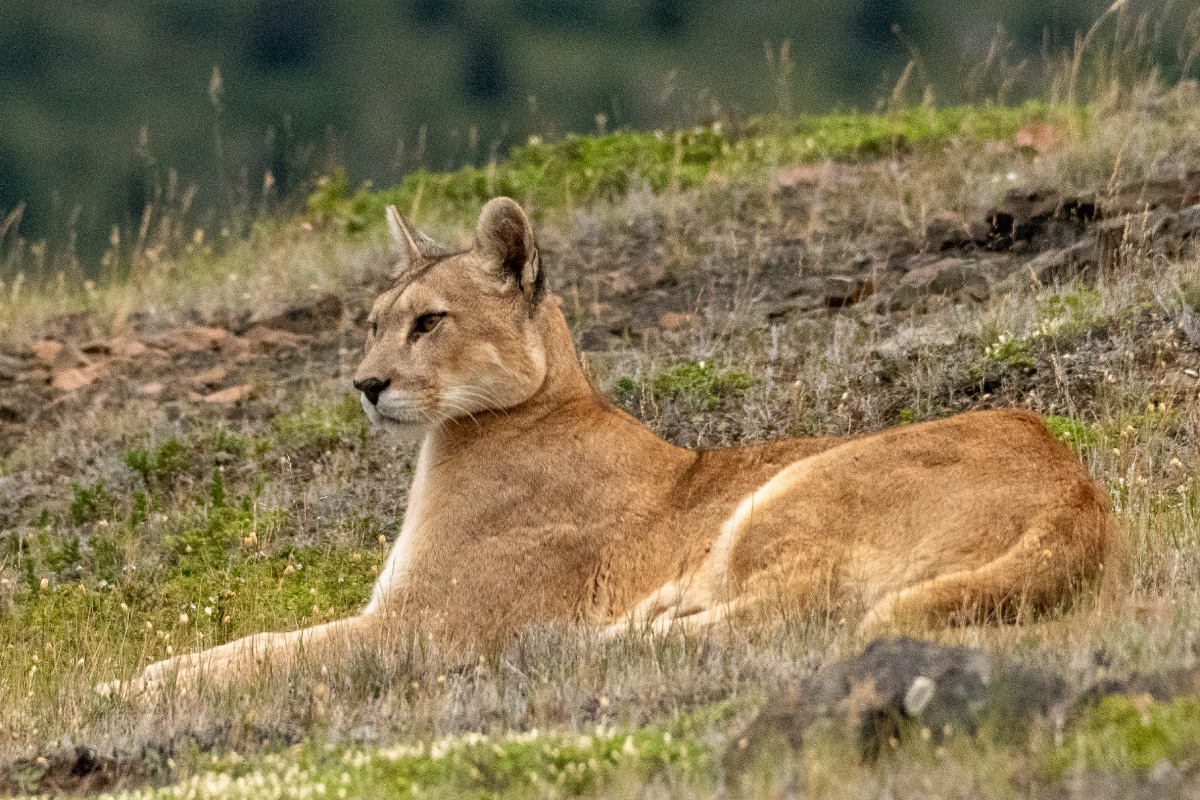
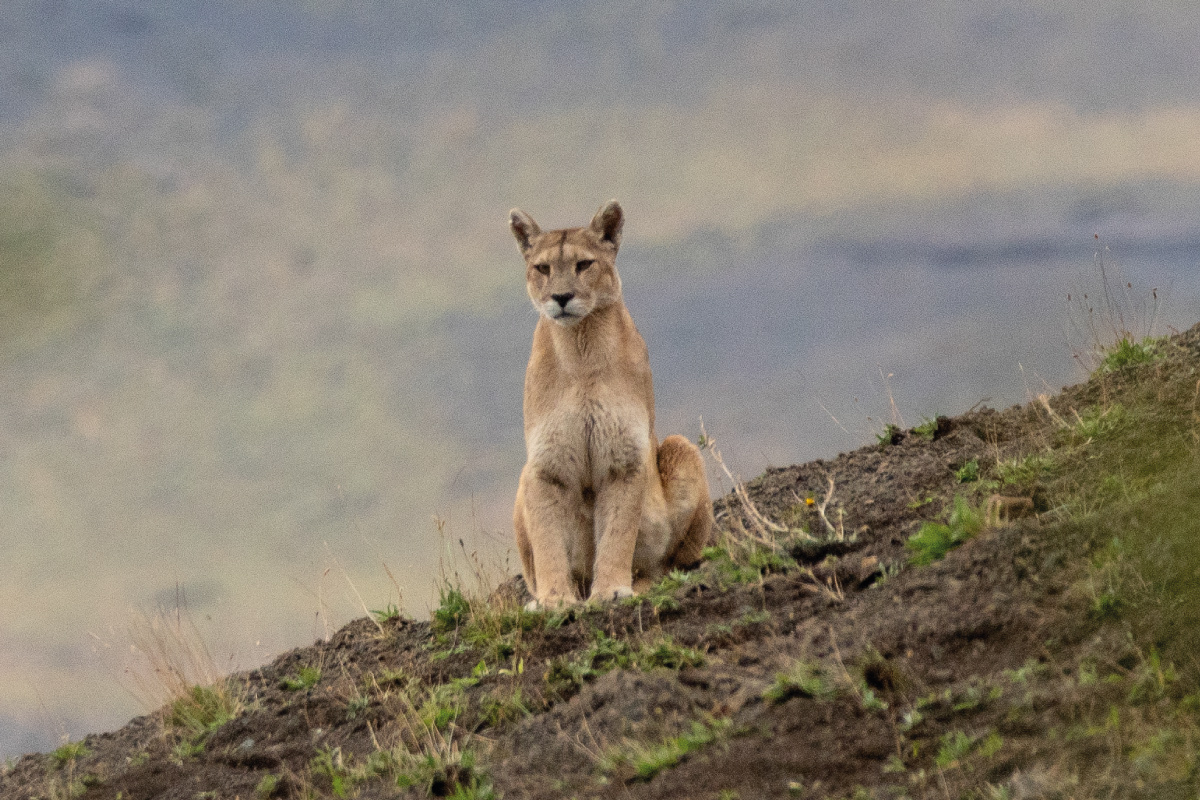
The puma (Puma concolor) is the second-largest cat in the Americas, after the jaguar, and Torres del Paine is now one of the places with the highest documented density of wild pumas anywhere in the world. The reason is straightforward and biological: an abundance of guanaco prey, terrain with enough cover for ambush, and decades of protection that have allowed the population to recover. This has turned the park into one of the world's premier destinations for puma tracking.
Pumas are solitary and highly territorial. An adult male defends a range of up to 200 km² (77 mi²); females hold territories roughly half that size. They hunt primarily at dawn and dusk, targeting young or weakened guanacos with a precise bite to the neck. The puma is the highest-jumping cat in the world: it can leap up to five meters (16 ft) vertically and twelve meters (39 ft) horizontally. Unlike lions and tigers, it does not roar — instead, it communicates through hisses, growls, and high-pitched screams.
Seeing one in the wild takes patience, a trained eye, and above all, respect for the animal's routine. The puma doesn't put itself on display — it appears only when the observer has earned the chance.
Huemul: the endangered deer of the Patagonian Andes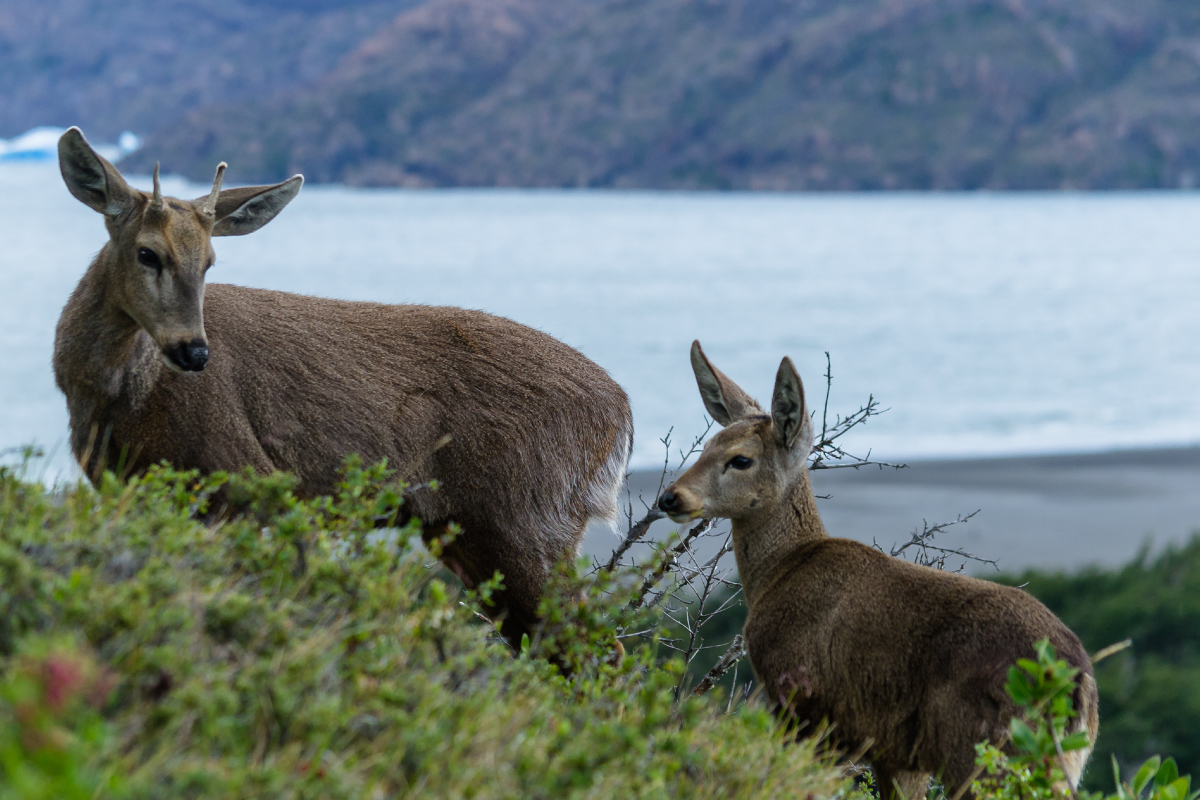
Of all the animals in the park, the huemul (Hippocamelus bisulcus) is probably the most symbolic — and, at the same time, the hardest to encounter. It's the largest native deer in southern South America, endemic to the forests and rocky terrain of the Patagonian Andes between Chile and Argentina, and it appears alongside the Andean condor on Chile's national coat of arms.
Its history, however, is one of dramatic loss. Before European colonization, the huemul's range extended from the Maule River in central Chile all the way to the Strait of Magellan. Today, fewer than 1,500 individuals remain in the wild — a decline of more than 99% in less than two centuries. The huemul is listed as Endangered by the IUCN, and the Chilean government has designated it a National Natural Monument.
The huemul inhabits steep terrain, favoring lenga beech forests and densely vegetated ravines, and tends to move in pairs or small family groups. It is quiet, cautious, and almost always travels when no one is around. Spotting a huemul in Torres del Paine is exceptional — and those lucky enough to have seen one tend to agree on one thing: it isn't a sighting you can chase. It's one that happens.
Andean Condor: the world's largest flying bird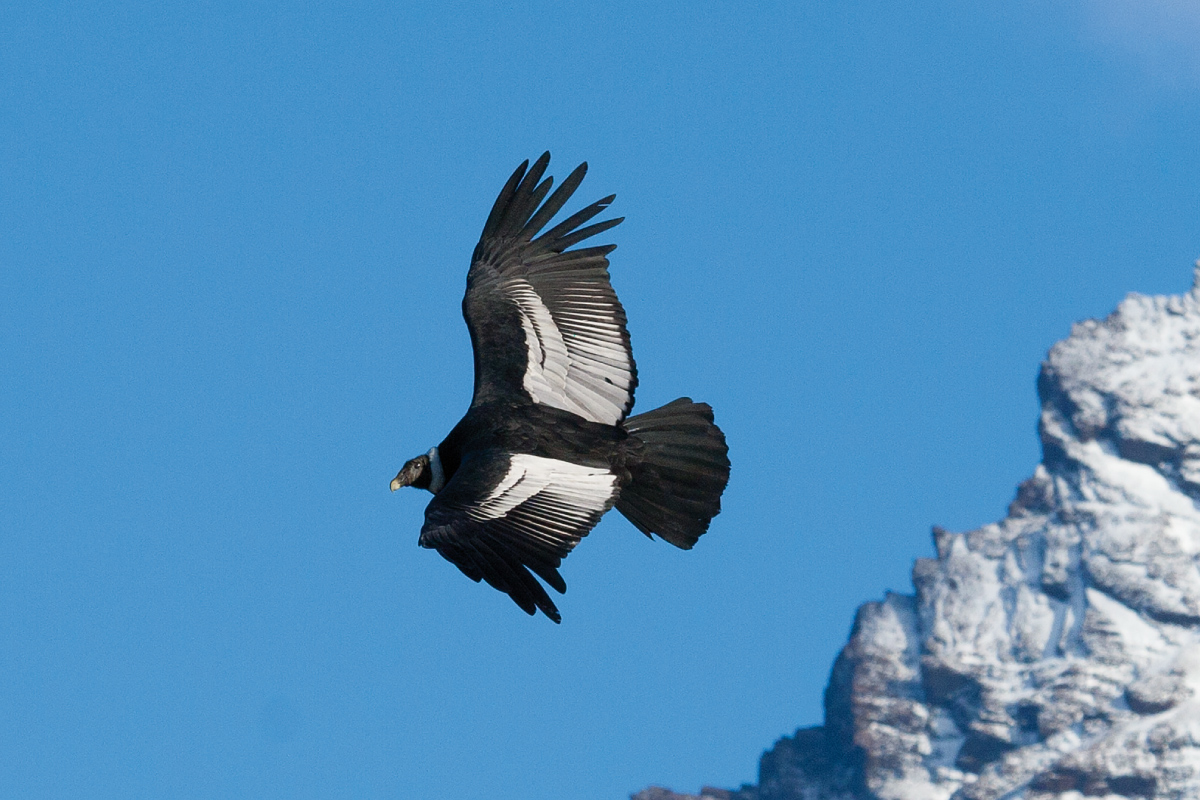
The Andean condor (Vultur gryphus) is, by combined weight and wingspan, the largest flying bird on the planet. An adult male can weigh up to 15 kilos (33 lbs) and spread its wings to a span of 3.3 meters (nearly 11 feet) from tip to tip. It's a scavenger rather than a hunter, feeding on carrion — a role that makes it essential to the park's natural cycle.
Its biology is remarkable in nearly every detail. Andean condors can live 70 to 80 years in the wild; they mate for life and remain together at the same nesting site for decades. Females lay a single egg every two or three years — which explains why the species is so vulnerable: a single death from secondary poisoning, currently the leading threat, can erase years of reproductive effort. The Andean condor is listed as Vulnerable by the IUCN.
Once airborne, flying costs the condor very little energy: it rides thermal currents and can glide for hours without flapping its wings. In Torres del Paine, the best time to spot one is late morning, when the sun heats the walls of the Paine Massif and the thermals begin to form. Mirador Cóndor, near the Pudeto sector, is one of the most reliable viewpoints from which to see them.
Other iconic species of Torres del Paine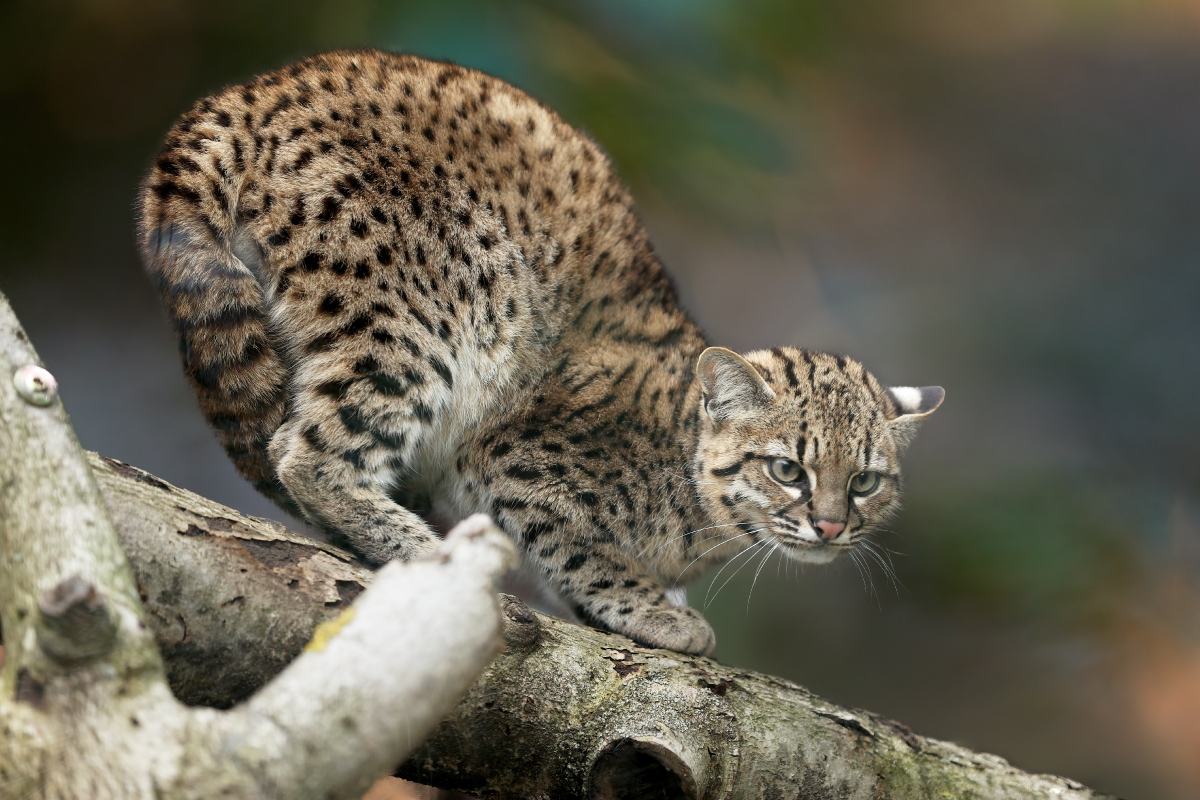
Beyond the puma and the guanaco, the park is home to a number of smaller, more elusive animals — several of them facing delicate conservation status.
- Geoffroy's cat (Leopardus geoffroyi): a small spotted cat, roughly the size of a domestic house cat. Primarily crepuscular and nocturnal, which is why it's almost never seen by hikers. Listed as Near Threatened, it's one of the species most frequently captured by the park's camera traps.
- Culpeo fox (Lycalopex culpaeus): the largest fox in Patagonia, with a reddish coat and robust build. Often appears alone at the edge of the road, almost always wary of human presence.
- South American gray fox (Lycalopex griseus): smaller and grayer than the culpeo, known locally as chilla. It coexists with the culpeo throughout the park.
- Lesser rhea (Rhea pennata): the largest flightless bird in South America. It can run at 60 km/h (37 mph) and, in a notable biological rarity, it's the male that incubates the eggs and raises the chicks. Listed as Near Threatened.
- Magellanic woodpecker (Campephilus magellanicus): the largest woodpecker in South America, endemic to the southern beech forests. The male sports a striking bright-red crest.
Torres del Paine wildlife conservation
Several of the species described above are fragile: the huemul is endangered, the Andean condor is vulnerable, and Geoffroy's cat is listed as near threatened. Protecting them requires more than a well-defined national park — it requires continuous fieldwork, rigorous data, and informed decision-making.
That is the mission of Las Torres Patagonia Conservancy, a nonprofit dedicated to the protection and conservation of the wildlife and ecosystems of Torres del Paine. Through programs in wildlife monitoring, ecological restoration, scientific research, and environmental education — developed in partnership with researchers, universities, and other organizations — the Conservancy has built a body of essential information that supports species protection and overall ecosystem health.
The basic rule for any visitor is simple: if your presence changes the animal's behavior, you're too close. Keeping a distance, speaking quietly, never feeding wildlife, and staying on marked trails are not tourism guidelines — they are expressions of the same principle that drives conservation work throughout the park.
New puma tracking excursion in Torres del Paine: 2026-2027 season
The wildlife of Torres del Paine isn't part of the scenery — it is the scenery. Observing it well — the guanaco that anchors the food chain, the puma that appears precisely when you stop looking, the condor crossing the Almirante Nieto in late afternoon, the huemul that almost no one manages to photograph — takes time, expert guidance, and silence.
For the 2026–2027 season, Las Torres Patagonia is launching a new puma tracking excursion, led by a team specialized in tracking and feline behavior, with limited group sizes and a guiding philosophy that puts the animal before the photograph.