
- 9 mins
A low-difficulty walk built from nine tonnes of recycled plastic, winding past wetlands, native forest and more than 30 species of birds.
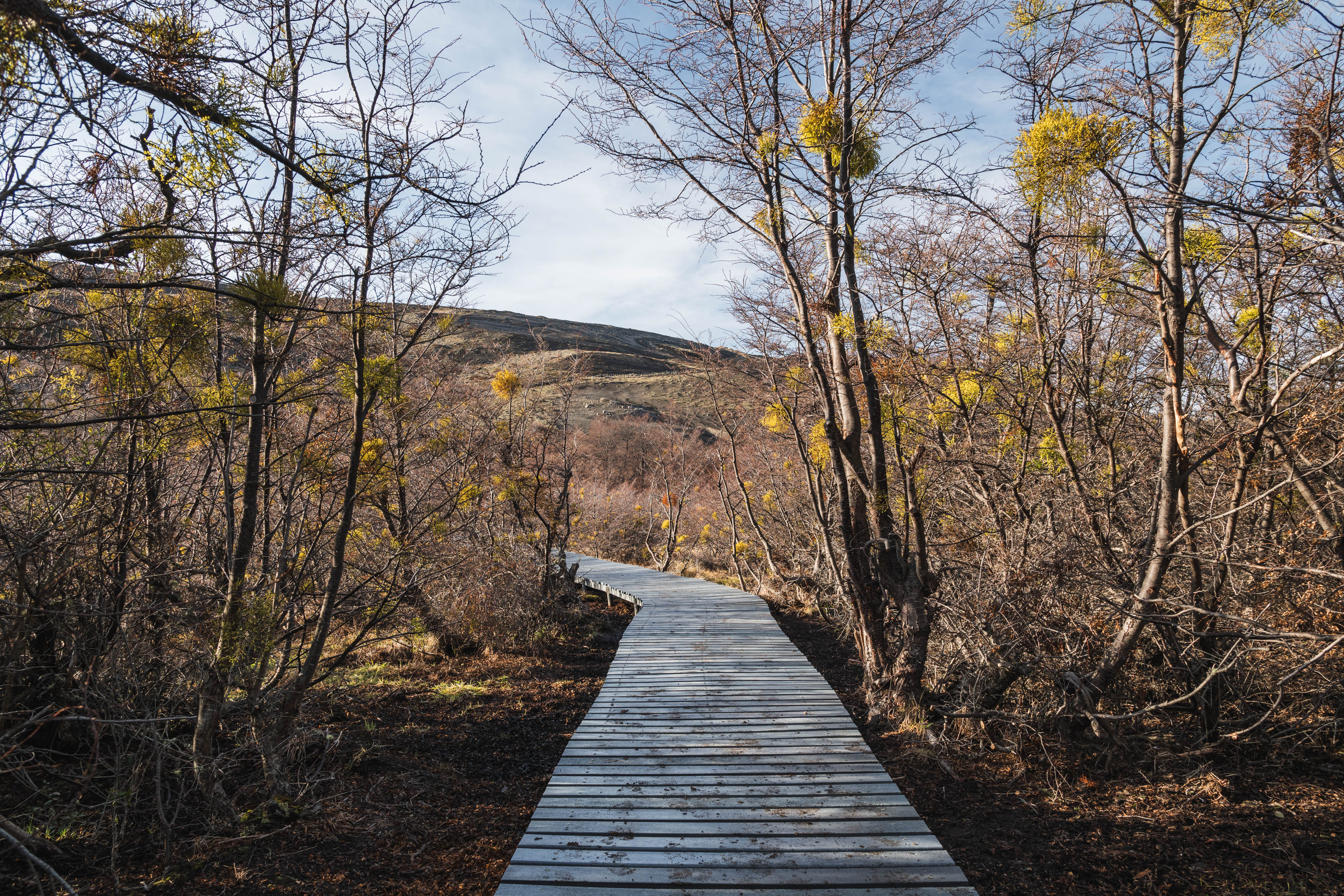
The Interpretive Trail at Las Torres Patagonia packs a representative slice of Torres del Paine into just over two kilometres. Gentle slopes, plenty of places to rest, and a route you can finish in about an hour and a half make it one of the most approachable ways to meet the park, self-guided and no reservation required.
Along the way, wetlands, native forest, glacial rock formations and more than 30 species of birds bring the Patagonian ecosystem within easy reach. Boardwalks, bridges and lookouts carry you through it all, and here's the twist: they're built from nine tonnes of recycled plastic. Conservation runs right through the trail itself, not just the scenery around it.
A low-difficulty walk in Torres del Paine
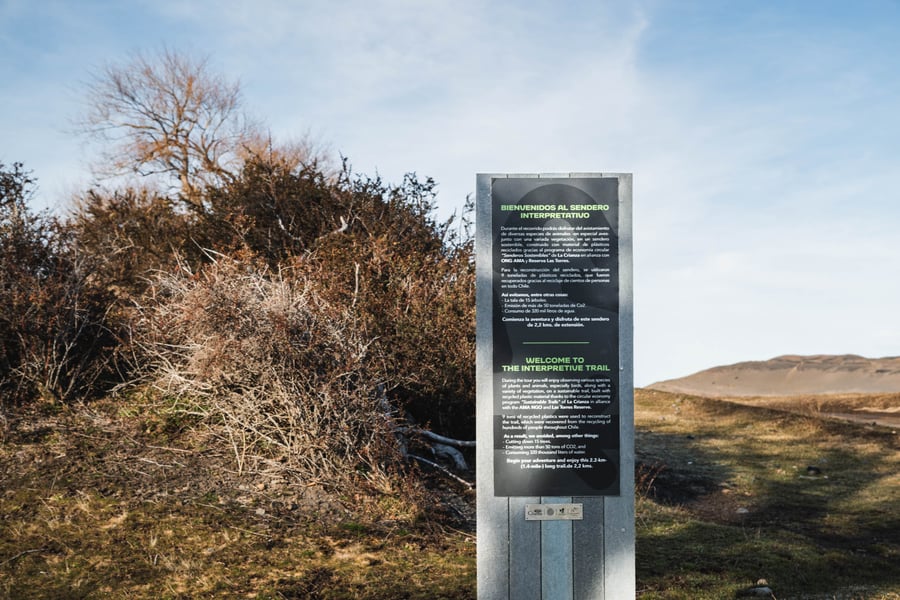
Not everything in Torres del Paine calls for muddy boots and relentless elevation gain. The Interpretive Trail is one of the easiest hikes in Torres del Paine: gentle gradients, wide sections, benches to catch your breath, and a layout anyone can take at their own pace. It's fully self-guided, so there's no guide to hire and no timetable to keep.
What sets it apart from routes like the Base Torres trek is that here you take in nature without the physical effort. Families with young children, older travellers, hikers acclimatising before a longer trek, and student groups on environmental-education outings all find it an easy door into the Patagonian ecosystem. Five stations are spaced along the path, each one an invitation to stop, read a panel, and understand what you're looking at.
A trail built from recycled plastic
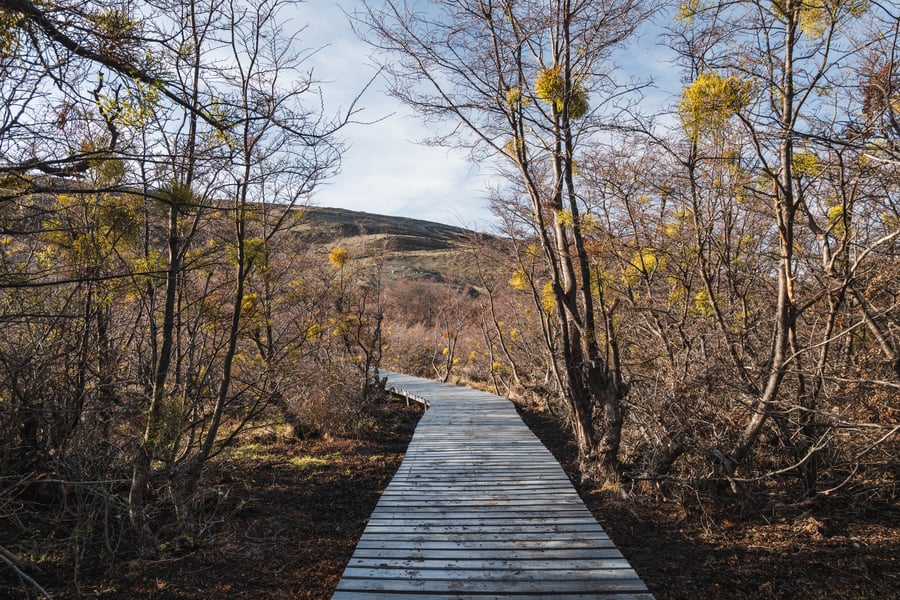
This is where the story gets interesting. The trail was rebuilt through a partnership between Las Torres Conservancy (Las Torres Patagonia's own NGO) and La Crianza, a Chilean brand, under the "Senderos Sostenibles" (Sustainable Trails) project. La Crianza supplied nine tonnes of plastic lumber: a building material made from recycled plastic reclaimed from its own packaging at collection points across Chile.
Don't picture a flimsy stand-in for real timber. This recycled-plastic boardwalk is stronger than natural wood, non-flammable, slip-resistant even in harsh weather, and it won't crack or splinter. It's expected to last close to a century, which means the trail should still be here for generations to come.
Five stations and views of Mount Almirante Nieto

The route comes with five stations, lookouts, bridges, boardwalks, information panels and dedicated birdwatching points. The boardwalks cross the wetlands without ever touching them, letting you get close to these fragile environments without disturbing them. At several points the path opens onto Cerro Paine and Monte Almirante Nieto, two landmarks that stay with you for much of the walk.
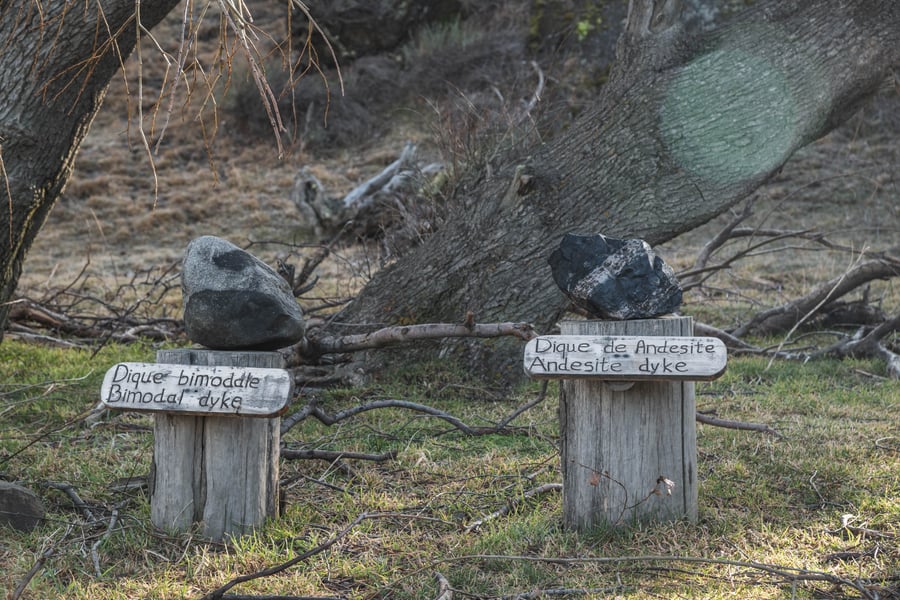
The trail doubles as an open-air classroom. The panels explain how the area's landforms took shape and how ice carved these valleys — the story of the glaciers that built Torres del Paine, read as you go. That's the whole point of an interpretive trail: not just to look, but to understand the reason behind every wetland, every lagoon, every rock. The signage and interpretive route were put together by the team at Las Torres Patagonia Conservancy, designed to carry a message of knowledge and conservation to travellers, locals and students alike.
Patagonian flora and fauna

The Interpretive Trail is one of the best places for birdwatching in Torres del Paine without walking for hours. Along the way you may spot some of the area's 30-plus bird species: austral parakeets, the green Patagonian parrots with bright red tails; melodious austral thrushes; and the small, curiously named cometocino sierra-finch. With a little luck and patience, larger wildlife turns up too, the elusive Geoffroy's cat, or even a puma crossing in the distance.
Patagonian flora and fauna reveal themselves at the same unhurried pace. In spring and summer, orchids and native wildflowers appear, and stretches of ñire forest line the path.
Practical tips for walking the Interpretive Trail
Walking the Interpretive Trail is straightforward. It's a self-guided trail right by Hotel Las Torres — low difficulty, no booking needed, and roughly an hour and a half from start to finish. Go whenever suits you, at your own pace, and come back as often as you like during your stay.
A word on footwear: after rain, some sections can get muddy or flood, so sturdy shoes — ideally waterproof — are worth having. Beyond that, there's little to plan for. Its closeness to the hotel and its educational focus also make it ideal for student groups and families looking to ease into the Patagonian ecosystem, before or after more demanding excursions.
A different way to experience Torres del Paine

The Interpretive Trail offers a short, low-difficulty way to get to know some of Torres del Paine's signature ecosystems. Wetlands, native forest, birdlife and glacial rock come together across its 2.2 kilometres, while the stations along the way help you make sense of the landscape and the effort to protect it.
Set just steps from Hotel Las Torres, the trail slots easily around the rest of your visit. From there you can also reach the full range of Hotel Las Torres experiences, each offering a different way to explore Torres del Paine.