
- 5 mins
The W Circuit is a dream for many hikers. Lacing up your boots, adjusting your trekking poles and letting the trail guide your adventure through stunning landscapes that unfold one by one. But like any trekking experience, it comes with its challenges – and the W Circuit is a special one.
This iconic route takes you on a journey of 70 to 80 kilometers through the Torres del Paine National Park, where you’ll face steep terrain, demanding elevation changes and weather that can shift dramatically by the hour. Being physically prepared is key to fully enjoying the experience, and taking charge of your own adventure.
In this blog, we’ll cover everything you need to know in order to arrive in the best possible shape for the challenge: how to train your legs; how to manage the weight of your pack; and how to maintain proper nutrition. So, let’s start with the basics.
Assess Your Current Fitness Level
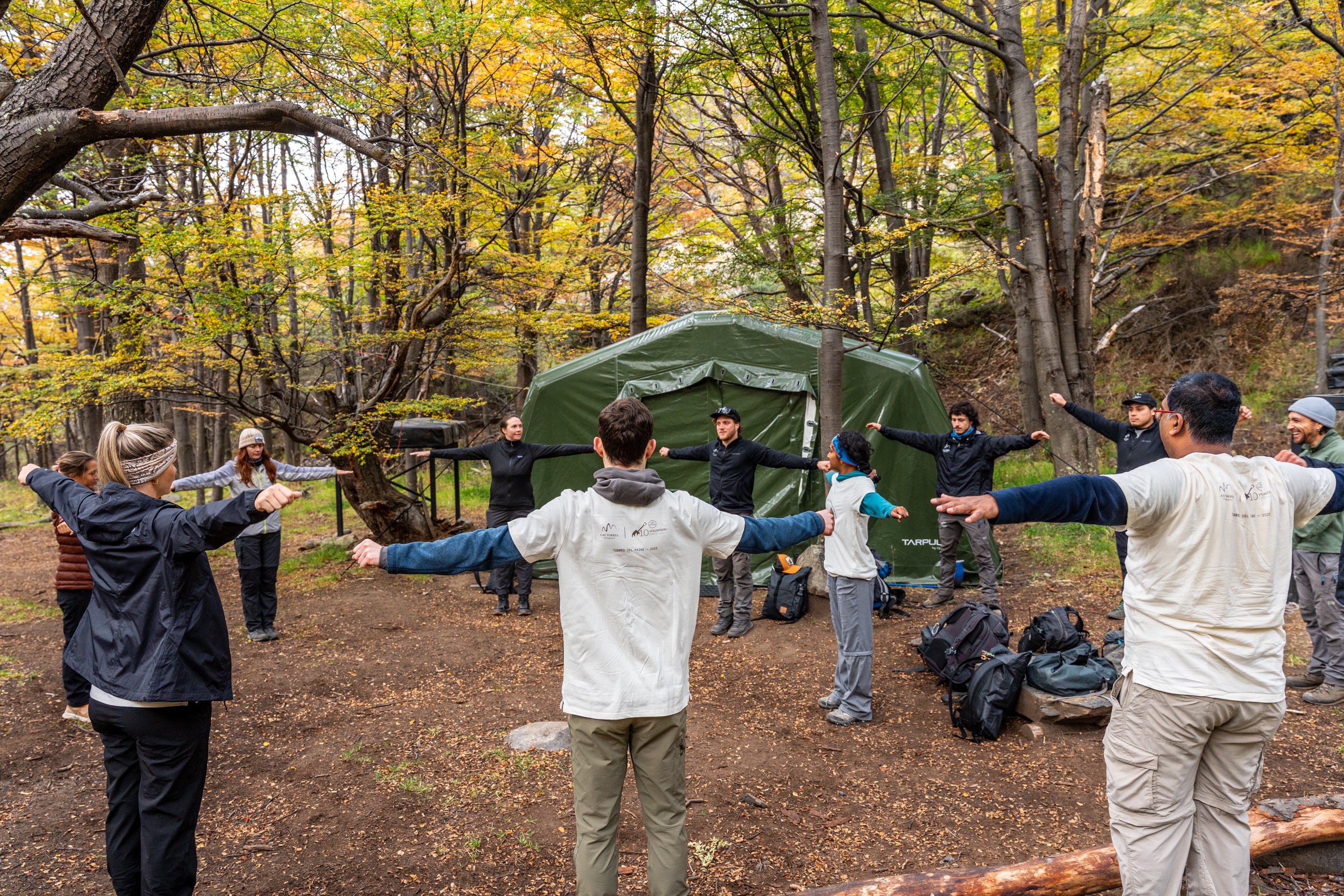
Every journey begins with understanding where you stand. Your first step is to evaluate how your body handles physical demands like those you are about to face.
Start by looking at your current activity level. If you’re already active – running, hiking nearby trails or going to the gym regularly – you may find it easier to train for this trek.
But if you live a more sedentary lifestyle or follow poor eating habits, you’ll want to start preparing several months in advance. Being honest with yourself is crucial – pushing your body beyond its limits can lead to injury, even with training. Knowing how your body responds to these kinds of conditions is essential.
A great way to start is by doing a 10-kilometer hike on a local trail, paying close attention to how your body responds. How do your knees handle elevation gain and descent? How does your breathing change with effort? How well do you recover afterwards?
Keep in mind that during the W Circuit, you’ll be walking anywhere between four and 10 hours a day. As they say: go slow, but don’t stop. You set your own pace.
Improve Your Cardiovascular Endurance
Rome wasn’t built in a day, and the W Circuit isn’t something you prepare for overnight.
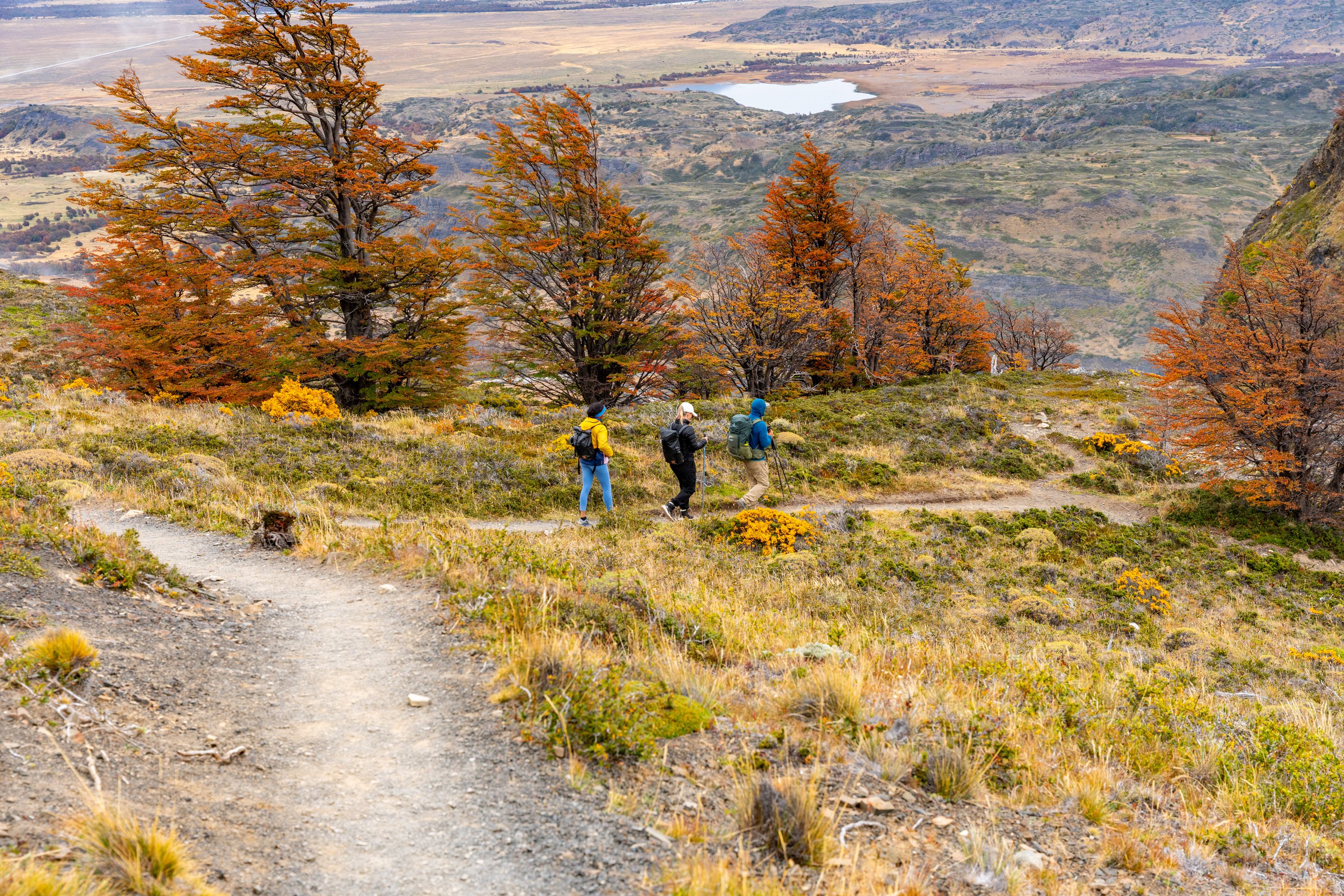
They key here is cardiovascular endurance. This refers to the capacity of your heart, lungs and muscles to work together efficiently to supply oxygen during extended periods of moderate to intense physical activity. It’s a core component of being ready to conquer the W Circuit.
So, how do you improve your endurance? There are plenty of activities that can help, including swimming, cycling, jogging and long-distance walking. Aim for consistent training for at least eight weeks before arriving in Patagonia. That way, your body will already be adapting to the sustained effort the trek requires.
Strengthen Your Legs, Core and Back
Your legs and core will be your best allies on the W Circuit. Your legs will get you to those breathtaking viewpoints, and your core and back will carry the gear you need.
The trails in Torres del Paine are irregular – you won’t always be walking on flat, even paths. You’ll face inclines, descents, rocky terrain and more. Your body needs to be ready for all of it.
Strengthen your legs and back with exercises like squats, deadlifts and calf raises. For your back, try resistance bands or rowing machines. A balanced routine is key – you’re not just preparing your legs to walk; you’re preparing your whole body to endure long days of effort.
Remember, a chain is only as strong as its weakest link.
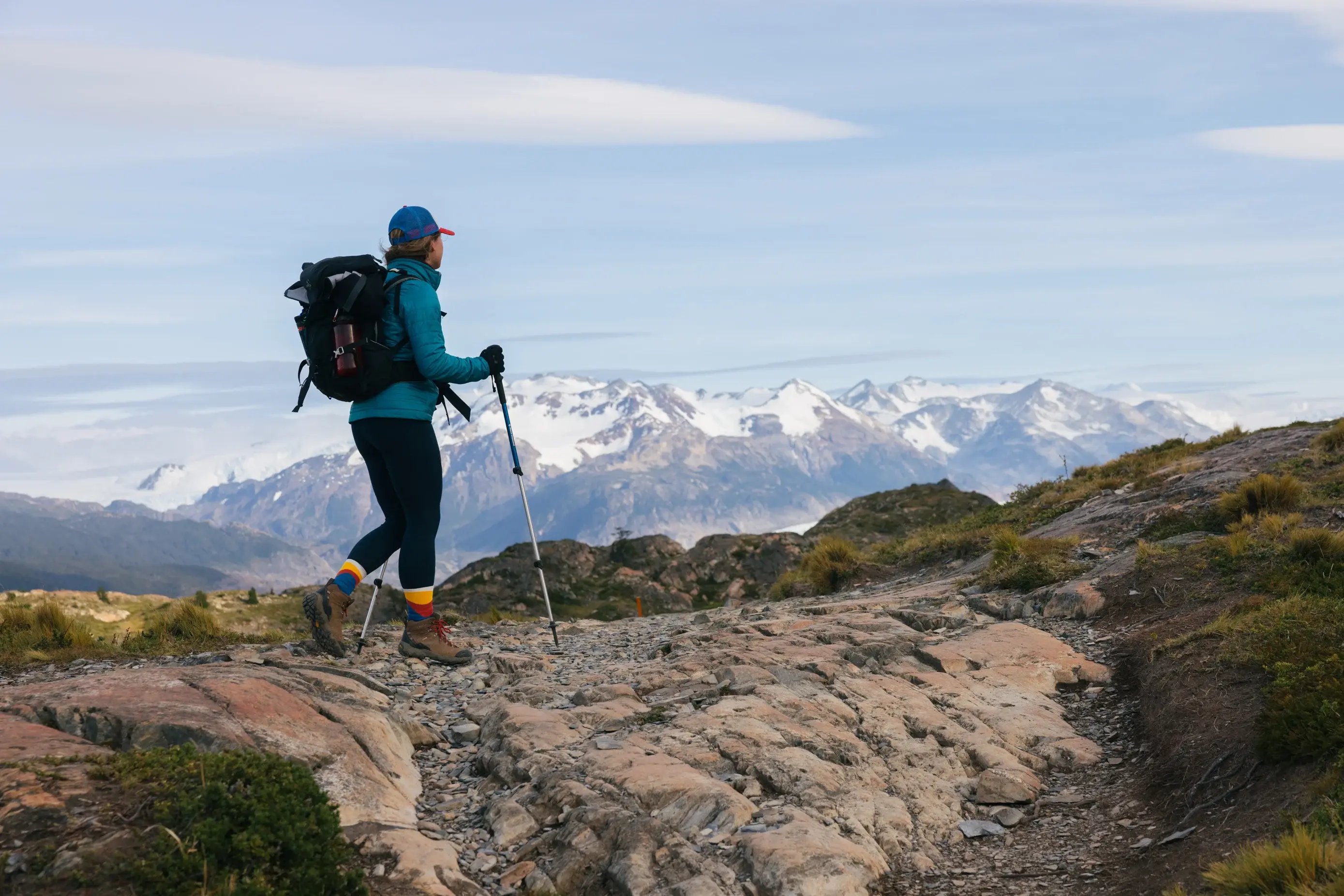
Train with a Loaded Backpack
That’s right, on the W Circuit you’ll be carrying your gear from one stop to the next. While there are porter services and full-equipment programs that allow you to leave behind your tent or sleeping bag, you’ll still have to carry a percentage of your gear.
If you choose to hike without porter support, your pack may get quite heavy. We recommend not carrying more than 10-15% of your body weight to avoid unnecessary strain.
To prepare your body, start doing weekly hikes with weight in your pack. This could be camera gear, water bottles or other essentials. Your back and shoulders will thank you later.
Get Used to Continuous Walking
It might be time to leave the car behind and start walking more. One of our final tips is to build a walking habit into your daily routine. Maybe you start walking home from work, or commit to an hour of walking each day, mixing in public transport as needed.
Unlike a single-day hike to the Base Torres Viewpoint, the W Circuit is a multi-day endurance experience. Your body needs to get used to back-to-back hiking, day after day. The reward comes at the end, but every step counts towards completing the journey.
During the week, you can practice with shorter walks, supplemented with longer weekend hikes of 15 to 20 kilometers if possible. Get your body used to a consistent rhythm. As we’ve said before, slow and steady wins the race.
The W Circuit doesn’t require you to train like an elite athlete or build huge muscles – just enough to keep a steady pace each day. In Patagonia, many locals walk these distances daily. No matter their age or build, their legs are strong, prepared and ready to take on the trail.
The experience is waiting for you – an unforgettable way to discover Patagonia.
Are you ready to take on the challenge of a lifetime?